

How The Skin Responds To Burns And How It Repairs
Click the triangle below to listen to the podcast cursory and admission the transcript past clicking here.
What is a burn injury?
A burn injury most oft amercement layers of skin. Deeper burn injuries may harm tissue (fatty and muscle), or even os.
What are the main causes of burn down injuries?
Burn injuries tin can happen in many ways. Common examples are:
- Flame:contact with fire or flame
- Flash: resulting from the heat of an explosive boom
- Scald: contact with hot liquids or hot steam
- Grease: contact with hot grease
- Contact: prolonged contact with something hot
- Electrical: electricity passing through the body and heating the pare and underlying tissue
- Chemical: contact with chemicals, such as acrid or alkalis
What are the different degrees of burn injury?
Clinicians mensurate depth of burns in degrees:
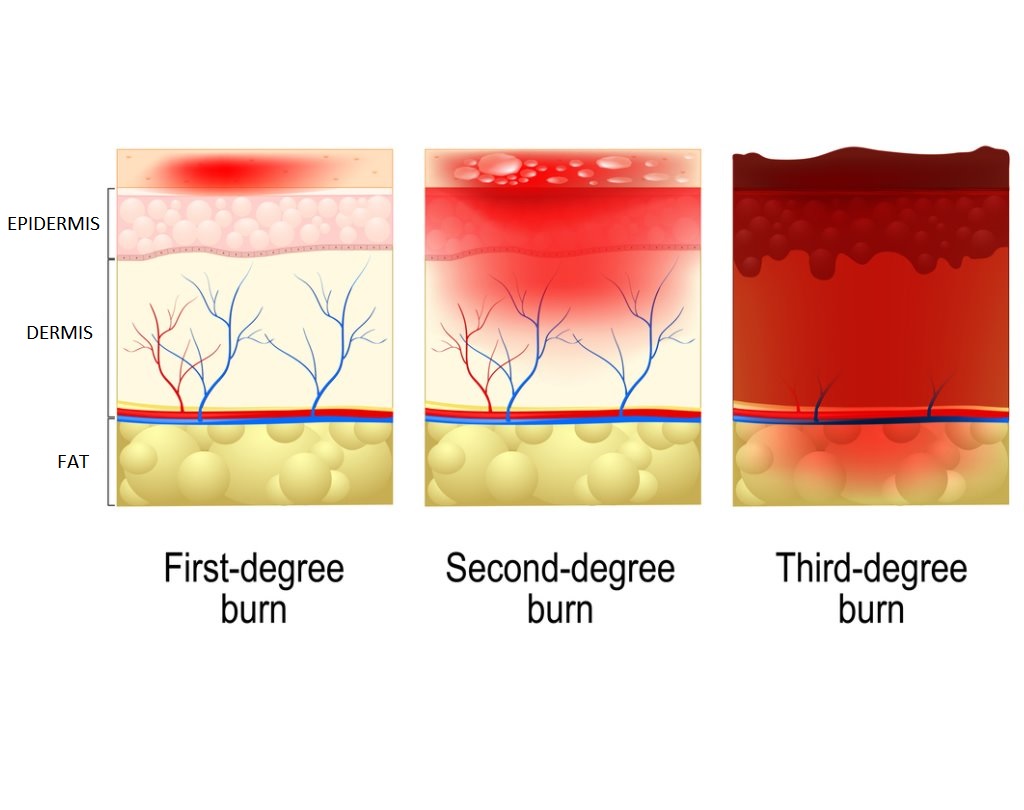
Start caste burns are the mildest blazon of burn down. They are as well called superficial burns. First degree burns damage only the epidermis, which is the first layer of pare. First degree burns usually don't become infected or leave a scar. The skin may get red but won't break and usually heals within 3–5 days.
2d degree burns are also called fractional thickness burns. This type of burn down damages the epidermis and the dermis. The dermis is the second layer of pare. Second degree burns are painful. The injured area can peachy and appear scarlet with blisters. The damaged skin normally grows back unless information technology becomes infected or the injury gets deeper.
Third degree burns are also called total thickness burns. This type of burn down goes through the epidermis and dermis and affects deeper tissues, which may also exist damaged or destroyed. The injured area can appear charred and may be black, white, or deep red in colour. This surface area is oft numb to light touch. Third degree burns don't heal by themselves, so pare grafting is frequently necessary (discussed later).
Fourth degree and deeper burns destroy the skin plus fatty, musculus and sometimes bone.
How is fire size estimated?
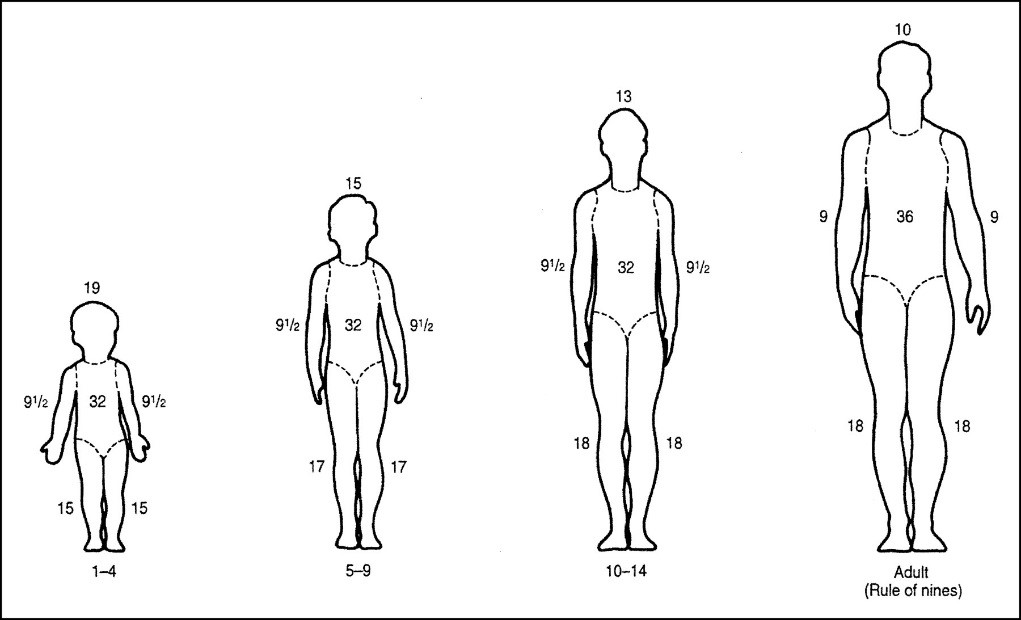
Total trunk surface area (or TBSA) burned is the percent (%) of the body that is burned. To estimate burn down size, clinicians use a formula that considers the age of the injured person and a diagram chosen the Rule of Nines (shown below). This is the most common way to estimate burn size. First degree burns are not included in the adding of percentage TBSA burn.
Tin can lungs be burned?
When breathed in, smoke or toxic gases can harm the lungs. Clinicians call this an inhalation injury.This type of injury oft occurs when the injured person is trapped in an enclosed area for a long amount of time. Harm depends on the type of gas and smoke particles inhaled and on length of exposure.
How is the severity of burn assessed?
Clinicians consider many factors to determine the severity of a burn down injury:
- Degree (depth) of the burn,
- Size (percentage) of the skin that is burned, and
- Age of the injured person
- Other factors include:
- Location of the burn on the body,
- Inhalation of toxic gases or smoke,
- Type of burn,
- Other traumatic injuries (bone fractures), and
- Other health problems (such as diabetes, heart bug, or alcoholism).
What are skin grafts and donor sites?
Skin grafts are thin layers of peel that surgeons have from an unburned area and and then surgically identify on the burned area. The area where the skin is taken from is called the donor site. Common donor sites are the thigh and the back but may be taken from any uninjured surface area of the torso other than the face. The donor site generally takes nearly ii weeks to heal.
What are the dissimilar types of pare grafts?
Surgeons consider many factors when deciding what type of pare graft to use. They await at the condition, thickness, and size of the wound and where the injury is on the body.
- Autografts are permanent pare grafts that replace burned skin. With this graft, surgeons remove skin from one identify on the body and place it on the burned surface area of the body. There are two types of autografts:
- Divide-thickness skin graft involves removing the epidermis and a shallow layer of the dermis and then placing information technology on the burned area.
Full-thickness pare graft involves removing the epidermis and dermis and placing it on the burned surface area.
- Allografts and homograftsare temporary grafts to cover the wound. Donor skin comes from another person (usually a cadaver).
- Xenografts are temporary grafts to comprehend the wound. Donor pare comes from a pig.
- Meshed graftsare grafts in which donor skin is perforated with small slits or holes. Surgeons tin then aggrandize the mesh to cover a large burned expanse of the trunk. All four types of grafts can exist meshed.
- Sail grafts are grafts that are placed on the wound directly from the donor site without existence meshed.
What nearly infection?
Burned areas can get infected, at the fourth dimension of the injury and during the healing procedure. To prevent infection, people with burn injuries should follow the treatment orders of their healthcare team. They should besides follow the hospital's infection control guidelines, such every bit using gloves and gowns when recommended. Practicing proficient hand hygiene (make clean easily) can assist preclude infection. This applies to both the injured person and their family members, friends, and caregivers.
What well-nigh nutritional needs?
Eating well is a key part of the recovery process. Healing from a burn injury requires more calories and protein than healing from other types of injury. Nutritionists may be available to provide information virtually a well-rounded nutrition.
What about mental health?
It is common to experience anxious or upset after a traumatic injury. Burns can put tremendous stress on the patient and family. Burn teams include psychologists and psychiatrists who can assistance with feelings and concerns. Psychiatric and psychological services address issues like depression, anxiety, post-traumatic stress, addiction, and sleep issues. Social services can help families with managing housing, finances, and navigating the healthcare organization.
What nigh rehabilitation?
- Rehabilitationis the process of using education and therapy to help a patient attain his or her maximum potential for recovery after an injury. Rehabilitation may also include physical therapy or occupational therapy.
- Physical therapy treats physical impairments. It aims to improve a person's ability to walk and movement, do daily tasks, and live independently. Treatment may include exercise, splinting, bandaging, medicine, and use of assistive devices (such every bit crutches or walkers), massage, and joint mobilization.
- Occupational therapy uses everyday activities and materials to help patients in their own recovery. For example, a patient could exercise dressing, bathing, and feeding themselves or cooking.
- Oral communication-Language Pathology helps with swallowing, voice, cerebral issues, and communication.
Several types of facilities provide rehabilitation services to patients with burn injuries.
- A burn centre often provides intensive physical and occupational therapy during astute hospitalization. The burn team will besides follow the patient long-term, prescribing additional therapy if needed.
- An inpatient rehabilitation facility is a specially designed medical rehabilitation facility. Patients stay at the facility full-fourth dimension after discharge from the burn center and must exist able to do at least 3 hours of therapy per day.
- A skilled nursing facility is a place where patients may become after they leave the burn center. Patients live in these facilities and receive medical and nursing intendance to assist them recover.
- An outpatient rehabilitation center is a medical facility that provides physical and occupational therapy services to people who are living at home.
What should patients look?
The recovery process differs for everyone. Most patients report feeling pain, fatigue, and itching during recovery and rehabilitation.
- Pain is mutual. 3rd degree burns are painful with deep pressure. 2nd degree burns are painful with air motility or changes in temperature. Get-go degree burns are painful on the surface of the peel. Health care providers treat pain in different ways.
- Fatigue is mutual. The more astringent the burn injury, the greater the level of fatigue.
- Itching is a common part of the healing process. Moisturizers and antihistamines tin help make the burned surface area less itchy. Patients should never scratch their wounds.
Patients may have a tough time dealing with these symptoms. Simply health care providers can offer at least some relief. Patients should always let health intendance staff know how they feel.
What tin can family and friends do when a loved one is injured and hospitalized?
In addition to care from medical staff, patients can too draw support from family and friends. Visitors and caregivers play an important role during the recovery process. It is important for family unit members and friends to also have care of themselves (for case, housing, food, and care of children). It tin can be helpful to coordinate visiting times amongst friends and family unit members.
Family members should also assign i person to be the main betoken of contact with medical staff. This person should be an adult who is available to talk with the burn squad.
What resources are available?
Fact sheets well-nigh burn down injuries are a not bad source of information. Fact sheets from the Fire Model Organisation talk over many topics related to burn injury, such as slumber problems, torso paradigm, social interactions, and diet. Fact sheets are bachelor online (http://world wide web.msktc.org/burn/factsheets) in English and Spanish. Videos are as well available online (http://www.msktc.org/burn down/videos). They cover exercise and employment after a fire injury.
Feeling anxious and afraid is common later a traumatic injury. Several local and national support systems offer back up and suggestions about burn injuries. Patients and family members and friends should inquire the healthcare team about options for support systems.
For example, the Phoenix Society for Burn down Survivors (https://world wide web.phoenix-society.org/) is a national peer support system. This grouping is made up of fire survivors and their family members. They are trained to offer support and can schedule a visit and share their recovery process. The Phoenix Society offers a support program in more than 60 hospitals and fire clinics throughout North America.
Authorship
Agreement a Fire Injury was developed by Laura C. Simko, BS, Boston-Harvard Burn Model Organization; Emily A. Ohrtman, BA, Boston-Harvard Burn Model System; Gretchen J. Carrougher, MN, RN, Northwest Regional Burn down Model System; and Nicole S. Gibran, Medico, FACS, Northwest Regional Burn Model System, in collaboration with the Model Systems Knowledge Translation Center.
Source: Our health information content is based on research evidence and/or professional person consensus and has been reviewed and canonical by an editorial team of experts from the Burn Injury Model Systems.
Disclaimer: This information is non meant to supplant the advice of a medical professional person. You should consult your healthcare provider almost specific medical concerns or treatment. The contents of this fact canvass were developed nether a grant from the National Plant on Disability, Independent Living, and Rehabilitation Inquiry (NIDILRR grant number 90DP0082). The contents of this fact canvass practice not necessarily represent the policy of the U.Southward. Department of Wellness and Human Services, and you lot should not assume endorsement past the federal government.
Copyright © 2022 Model Systems Noesis Translation Heart (MSKTC). May be reproduced and distributed freely with appropriate attribution. Prior permission must exist obtained for inclusion in fee-based materials.

Source: https://msktc.org/burn/factsheets/Understanding_Burn_Injury
Posted by: parkerhisevout.blogspot.com
0 Response to "How The Skin Responds To Burns And How It Repairs"
Post a Comment